

In short. Every commercial suit of Rs 3 lakh or more from Noida, Greater Noida, Dadri and Jewar is heard at Surajpur, not in Noida city. That's where the Commercial Court for Gautam Buddh Nagar sits, inside the district court complex. Under the 2017 Uttar Pradesh arrangement, Ghaziabad and Hapur suits were sent there too, so check the current designation before you file. You'll go through mediation at the District Legal Services Authority first. That can take three to five months. If the other side fights, the suit itself often runs eighteen months to three years. Fix your limitation date first.
Is this your situation?
- Your unit in Noida or Greater Noida has Rs 3 lakh or more stuck with one customer, and you've finally decided it has to go to court.
- You went looking for a civil court in Noida city and found out these suits are heard only at Surajpur.
- A summons, mediation notice or order from Surajpur came last week. Nobody has told you what it wants from you, or by when.
- Your buyer is in Ghaziabad or Hapur. Someone at the trade association said the case could still land at Surajpur.
- Your usual lawyer sits in Delhi, and you're wondering whether this needs someone who's actually at Surajpur every week.
- Your factory is in Ecotech, Kasna, Site B or out on the Yamuna Expressway. You want to know how far the court is and how many trips it'll take.
- Your suit at Surajpur has been dragging on, and you'd like someone to open the file and tell you plainly where it stands.
Where's the commercial court for Noida and Greater Noida?
Surajpur. Every commercial suit worth Rs 3 lakh or more that arises in Gautam Buddh Nagar district is filed in the district court complex at Surajpur, Greater Noida, before the court designated as the district's Commercial Court. No civil court in Noida city takes these suits. People who work in Sector 18, Sector 62 or along the Noida Expressway are often surprised. They assume the court must be close by. It isn't.
The district itself is fairly young. It was formed on 6 September 1997 from pieces of Ghaziabad and Bulandshahr. It has three tehsils, Dadri, Gautam Buddh Nagar (Sadar) and Jewar. One district judgeship covers the lot, and it sits at Surajpur. Noida, Greater Noida, Greater Noida West, the Yamuna Expressway Industrial Development Authority's area and the airport belt near Jewar all answer to that complex. That's a lot of ground. According to the judgeship's own website there are more than thirty courts in the district, plus e-filing, e-Sewa Kendras and virtual court facilities.
When a Noida business asks us for a commercial court lawyer near Surajpur Court, what it really wants to know is simpler. Who's going to file there, sit through the mediation, turn up on every date, and go and inspect the court file when something goes wrong? That's what this guide covers, along with what the court hears, how you get there and what to sort out before your first visit. For the court's jurisdiction and procedure in full, see our page on the Gautam Buddh Nagar commercial court.
Getting to the Surajpur court complex
Most people drive. The complex is in the Surajpur area of Greater Noida, right by the Ecotech II industrial area. From Noida you take the Noida to Greater Noida Expressway, and from the Dadri side it's the old Dadri road. Leaving Sector 62 or 63 in office hours, give yourself nearly an hour, and more if you're coming from South Delhi over the DND Flyway or through Kalindi Kunj. Parking fills up on busy mornings. Leave early.
The Aqua Line of the Noida Metro does run down the expressway to Greater Noida. But Alpha 1 and Knowledge Park II, the stations closest to Surajpur, are still several kilometres from the court, so you'll need an auto or a cab for the last bit. Add twenty minutes. Witnesses coming from Delhi get this wrong all the time and walk in after their matter has already been called.
Our Vaishali office in Ghaziabad is on the eastern side of the Yamuna, which makes Surajpur a manageable daily run for us. The other office is in Dwarka. That suits clients from South West Delhi and Gurugram who happen to have a case at Surajpur. It doesn't matter which office you meet us at. There's one file, and the dates are tracked centrally against the case number.
Inside the complex: which counter does what
| What you need done | Where it happens | What helps |
|---|---|---|
| Apply for pre-institution mediation under Section 12A | District Legal Services Authority, Gautam Buddh Nagar, inside the court complex | Bring a short note of the claim and every address of the other side. The notice goes out from here |
| File the plaint | Civil filing section, or the eCourts e-filing portal where it's accepted | They'll check the index, page numbers and statement of truth. Missing pages get the file sent back |
| Get the case number and next date | Case information system, and eCourts services against the CNR number | Note the CNR the day the case is registered. Every check after that depends on it |
| Pay process fee and follow service of summons | The court's process serving section; email service if permitted | Give every address the defendant uses, including its GST principal place of business |
| Attend hearings | Whichever commercial courtroom the day's cause list shows | Cause lists usually go up on the district court website the evening before |
| Get certified copies of orders | Copying section; online copies where they're available | Apply the same day an important order is passed, more so if an appeal is possible |
| Get help with e-filing, case status or a virtual hearing | e-Sewa Kendra in the complex | Handy for an owner who wants to check a date without phoning the lawyer |
What can the Gautam Buddh Nagar commercial court hear?
Any commercial dispute where the specified value is Rs 3 lakh or more. What counts as commercial is set out in Section 2(1)(c) of the Commercial Courts Act, 2015, and it's a wide net. Goods and their supply. Services. Construction and infrastructure work, distribution and franchise deals, partnership and shareholder agreements, technology contracts, intellectual property, and leases of property used purely for trade or commerce. Section 12 tells you how to value the claim, and for money that means adding interest up to the filing date.
There's no upper limit. The Allahabad High Court doesn't try civil suits on an original side, so a Rs 4 lakh invoice claim and a Rs 40 crore infrastructure claim both start at Surajpur. Delhi is different. There, suits above Rs 2 crore go to the Delhi High Court. Plenty of Noida companies have offices or customers in Delhi, and that gap can give you a genuine choice of court.
Plenty of large Noida disputes never reach this court. Homebuyers with a grievance against a builder go to UP RERA or a consumer commission. If the quarrel is with the Noida, Greater Noida or Yamuna Expressway authority, over an allotment, lease rent or a cancellation, it usually becomes a writ petition in the Allahabad High Court. A shop, office or warehouse leased purely for business is different. That's a commercial dispute, and our page on shop and office lease disputes explains how it runs.
Why a Ghaziabad or Hapur suit might also be heard at Surajpur
The State's commercial courts came out of two government orders, one dated 31 October 2017 and the other 2 November 2017. Thirteen districts got a commercial court, Gautam Buddh Nagar among them, and the districts around each were tagged on. Ghaziabad and Hapur were tagged to Gautam Buddh Nagar. Read that way, a business from Sahibabad, Loni or Hapur filing a commercial suit would come to Surajpur, though those districts have district courts of their own.
These arrangements don't stay fixed. New courts get created, posts get filled, and the Allahabad High Court issues fresh notifications from time to time. We don't assume the 2017 position still holds on the day we file. Before any Ghaziabad or Hapur suit goes in, we check the current notification and confirm it at the filing counters. If a court has been designated within the Ghaziabad judgeship by then, that's where the suit belongs.
Why should a Noida business care? Two reasons. If the party that owes you is in Ghaziabad, you could well end up at Surajpur anyway, which is easy for you. Now flip it round. A Ghaziabad supplier sues you, and the summons arrives from Surajpur, though neither of you is based in Gautam Buddh Nagar. We cover the Ghaziabad end in our guide on a commercial court lawyer near Ghaziabad District Court.
Choosing a commercial court lawyer near Surajpur court
How close the lawyer's chamber is matters less than you'd think. What matters is whether the lawyer is actually in the room when your matter is called, and whether someone can walk into the filing section or the copying section that same week when a defect is raised or an order has to be collected. Commercial suits run on hard deadlines. Miss one at Surajpur and you can lose a right no court can give back. The right to file a written statement after 120 days is one.
Ask who'll attend your dates. Ask who'll sit with you at the DLSA mediation sessions, since that's often where a case settles or doesn't. Ask how you'll be told the next date and what got argued. You want a name and a method. If the answer is fuzzy, expect your file to be passed around the office.
Then read the drafts. Most commercial suits are decided by the plaint, the statement of truth and the Order XI disclosure long before anyone gives evidence. A lawyer who sits next door to Surajpur but drafts a thin plaint will cost you time. Our guide on questions to ask a commercial court lawyer before hiring tells you what to check at the first meeting. For smaller recovery files, the guide on picking a recovery lawyer near you in Delhi NCR covers the same ground.
How Advocate B.K. Singh's team runs Surajpur matters
Advocate B.K. Singh and Advocate Sadhna Singh work out of two offices, Dwarka in New Delhi and Vaishali in Ghaziabad, and appear in courts all over Delhi NCR. Surajpur is one of them. Advocate Sadhna Singh runs the recovery and commercial court files on a daily basis. Advocate B.K. Singh reads every new set of papers, decides the approach, and checks the plaint or written statement before it goes in.
Give him a new Gautam Buddh Nagar file and he'll ask about places before money. Which office accepted the purchase order? Where did the goods go, which account was the money supposed to reach, and what does the jurisdiction clause actually say? Those four answers tell you if Surajpur is right. When they're wrong, the plaint tends to come back months down the line. In our experience that's the usual reason it does.
We discuss fees at the first meeting and put them in writing, stage by stage. Before you commit, you'll know what the notice, mediation, filing and trial stages each involve. Court fee, the mediation fee and process costs come on top. We go through those before filing. If getting to Vaishali or Dwarka is hard, send the papers and we'll read them online first. Our guide on consulting online about a commercial dispute explains how.
From the first call to the first hearing at Surajpur
This is how a typical recovery or contract suit moves when we take it on for a Noida or Greater Noida business. A summary suit or an urgent injunction changes the order a little. We've flagged where.
Send us the papers, and we fix limitation
The contract or purchase orders, invoices, ledger, and the main emails or chats. We work out the three-year limitation date under the Limitation Act, 1963. Then we check whether a signed balance confirmation or a part payment has restarted it.
Decide the court and the route
We look at territorial jurisdiction under Section 20 of the Code of Civil Procedure, read the jurisdiction and arbitration clauses, and see if the claim fits a summary suit under Order XXXVII. If the facts point to Delhi or to arbitration, you'll hear it from us now, not later.
Send a legal notice
It isn't compulsory before a commercial suit. We'd still send one. A tight notice states the principal, interest, the documents relied on and a short deadline, and the reply often pins down the other side's story early.
Apply to the DLSA for Section 12A mediation
Unless urgent interim relief is genuinely needed, the application goes to the District Legal Services Authority at Surajpur. The process runs up to three months, extendable by two with consent. That time doesn't count against limitation.
Draft the plaint during mediation
We don't sit idle in those months. The plaint, statement of truth, list of documents and the Order XI declaration all get prepared, so the suit can go in soon after a non-starter or failure report.
File, clear objections, get the first date
The plaint is filed at the civil filing section or online, and court fee is paid. Objections are cured. The suit is then registered and marked to the commercial court, and the first hearing is usually about summons and any interim application.
Serve the defendant, and watch the clock
Summons goes by court process, by post, and by email where allowed. In an ordinary suit the defendant gets 30 days to file a written statement, which can stretch to 120 days with costs. In a summary suit it has to appear within 10 days.
Once pleadings close, the court takes up admission and denial of documents, holds a case management hearing under Order XVA, frames issues and fixes the evidence schedule. That stage is explained in our guide on what happens at the first hearing of a commercial suit.
How long a Surajpur commercial suit takes, and what you'll spend
| Stage | Usual time | Costs to plan for (not lawyer's fees) |
|---|---|---|
| Reading the papers, legal notice | 1 to 4 weeks | Drafting, then dispatch by registered post, courier and email |
| Section 12A mediation at DLSA Gautam Buddh Nagar | Up to 3 months, plus 2 with consent | Mediation fee under the 2018 Rules, tied to claim value; check the current schedule |
| Filing and registration | 1 to 3 weeks, with scrutiny | Ad valorem court fee under the Court Fees Act, 1870 as it applies in Uttar Pradesh; check the current schedule before filing |
| Service of summons | 1 to 3 months | Process fee and postage. More if the defendant has moved |
| Written statement | 30 days, and never past 120 days from service | Costs on a defendant who files late within the 120 days |
| Leave to defend in a summary suit | 2 to 6 months from filing | Deposit or security if leave comes with conditions |
| Admission, denial and case management | 2 to 4 months | Translating key Hindi documents, if needed |
| Evidence and final arguments | 8 to 20 months | Local commissioner's fee if one is appointed |
| Appeal to the Allahabad High Court | File within 60 days; hearing time varies | Court fee on the appeal, and trips to Prayagraj |
| Executing the decree | Ordinarily to be decided within 6 months | Process fees, attachment and auction costs |
Mediation at the DLSA in Surajpur: the day itself
The application under the Commercial Courts (Pre-Institution Mediation and Settlement) Rules, 2018 is short. Parties, addresses, what the dispute is about, the amount. The Authority sends notice to the other side. If they don't respond, or refuse, a non-starter report is issued and you can file the suit with it. If both sides turn up, a mediator holds sessions, usually inside the court premises.
Send someone who can actually take a decision. We've seen Noida companies send a junior accounts executive with no authority at all. The session's wasted. The other side reads it as weakness, too. Bring the ledger, the unpaid invoices and a one-page note of the dues with interest worked out. Mediators at Surajpur, like mediators anywhere, are looking for a number both sides can live with, and a clean calculation gets them there faster.
A settlement signed before the mediator has the status of an arbitral award, so if instalments are missed you can enforce it straight away, without filing a fresh suit. Insist on a default clause. Post-dated cheques too, where you can get them. If the talks fail, nothing said in mediation can be used against you later. The route and its exceptions are on our legal services authority mediation page.
What to bring to the first meeting about a Surajpur case
- The signed agreement, or the purchase orders or work orders, plus any emails that changed them later
- Every unpaid invoice, and the GST returns that show them
- Delivery challans, e-way bills, goods receipt notes, or the email where they accepted delivery
- Your ledger for this customer. If your accountant can certify it, even better
- Bank statements showing each part payment that came in
- Anything where the customer admits the dues, whether it's a balance confirmation, a TDS certificate or just a message
- The legal notice and their reply, if those have already gone back and forth
- Any mediation notice, summons or order from Surajpur, with a note of the day it reached you
- A board resolution or authority letter for whoever will sign the plaint
- Your Udyam registration certificate, if you're a micro or small enterprise
- Exported WhatsApp chats and emails. Keep the phone or the account too, for the Section 63 certificate under the Bharatiya Sakshya Adhiniyam, 2023
When a Noida business has to sue somewhere other than Surajpur
The basic rule is in Section 20 of the Code of Civil Procedure. You can file where the defendant lives or does business, or where all or any part of the cause of action arose. Take a Noida supplier whose purchase order was accepted at its Sector 63 office. Or one whose money was meant to land in a Noida bank account. Some part of that claim usually arose in Gautam Buddh Nagar. It's different if the buyer is a Delhi firm and the deal was signed, carried out and paid for in Delhi. Then Surajpur may be closed to you entirely.
Very often the jurisdiction clause settles it. Purchase orders from big buyers tend to say only the courts at Delhi, Mumbai or Bengaluru will have jurisdiction. Courts generally enforce that kind of clause where the chosen court also had jurisdiction under Section 20. File at Surajpur in the teeth of it and you'll face an application for return of the plaint under Order VII Rule 10. Those months are gone.
Every so often the choice is genuine. Get the figures out before you pick. File a claim above Rs 2 crore against a Delhi company in Delhi and it lands in the Delhi High Court, where court fee is worked out on a different schedule and appeals go to a different bench. We compare all three districts in our guide on where to file a commercial suit in Noida, Ghaziabad and Gurugram. A buyer outside the NCR raises the same kind of question. The Section 20 test doesn't change.
Small things about Surajpur that save you time
- Expect orders in Hindi. English pleadings are fine, and Hindi documents are routine. But orders and order sheets are often written in Hindi, so keep translations of the important ones if an appeal to Prayagraj looks likely.
- Plan for lost days. Bar abstentions, condolence references, the presiding officer on leave. Many district courts lose dates this way. Limitation and the 120-day deadline don't stop for any of it.
- Track by CNR, not by memory. The eCourts services website and app show the next date, the stage and the orders. Look after every hearing. Don't wait for someone to call you.
- Hand up a one-page note on busy days. The commercial court's list can be long, with big and small suits mixed in with arbitration petitions. A typed note of what you want that day, with page numbers, helps the judge deal with your matter in the time there is.
- Serve Noida companies everywhere they've been. Firms here shift between sectors a lot. Use the MCA master data, the GST registration and the last delivery address, and add any working email addresses from your correspondence.
- Keep the originals handy. At admission and denial the court can ask to see the original agreement or the signed balance confirmation. Photocopies won't do then.
A summons from Surajpur: what to do first
Note the day the summons reached you. That date runs everything. Look at what kind of suit it is, too. For an ordinary commercial suit you've got 30 days from service to put in a written statement, and the court can accept it up to 120 days, but only if you pay costs and give reasons. Day 121 is too late, whatever the excuse, and the Supreme Court said so firmly in SCG Contracts v. K.S. Chamankar (2019). Summary suits under Order XXXVII move faster. You get 10 days to enter appearance, then another 10 days, counted from when the summons for judgment is served, to ask for leave to defend.
Next, look the case up on eCourts using the number on the summons. You want to confirm the court, the next date, and whether any interim order has already gone against you. Then pull together every document you'll rely on. A commercial written statement has to disclose all documents in your power and possession under Order XI, deal with each allegation separately, and carry a statement of truth.
Maybe the plaintiff skipped Section 12A mediation with no real urgency. Or filed at Surajpur despite a jurisdiction or arbitration clause. Raise those points early. They don't stop the clock on your written statement, though. Our page on defending a commercial suit goes into defence strategy in more detail.
An invented example: a Noida printing unit and a Hapur buyer
This one is made up. A Sector 80 printing and packaging unit in Noida spends a year supplying cartons to a Hapur food company. Invoices adding up to Rs 22 lakh go unpaid. Nothing in the buyer's purchase orders mentions jurisdiction. Dispatch was from Noida, and the money was due in the unit's Noida bank account. The owner thinks he'll have to go to Hapur to sue.
His lawyer looks at two things. Some of the cause of action arose in Gautam Buddh Nagar, which by itself gives Surajpur jurisdiction under Section 20. Separately, Hapur had been tied to the Gautam Buddh Nagar commercial court by the 2017 arrangement, and the lawyer checks whether that's still the position before going further. The Section 12A application is made to the DLSA at Surajpur. The buyer comes to one session. He complains about two consignments and puts Rs 8 lakh on the table. Talks end there.
The unit files a summary suit at Surajpur. It relies on the purchase orders, the signed challans, and a balance confirmation the buyer's accountant had emailed six months earlier. Faced with its own confirmation, the buyer has trouble showing a plausible defence for most of the amount. None of this is a real case. A real court could see different facts differently.
After the decree: appeal at Prayagraj, execution at Surajpur
Whichever side loses at trial can appeal to the Commercial Appellate Division of the Allahabad High Court at Prayagraj under Section 13, and the limit is 60 days. Gautam Buddh Nagar comes under the principal seat. Not Lucknow. An appeal on its own doesn't halt execution. The side appealing has to seek a stay, and for money decrees the High Court commonly asks for a deposit as the price of one. Our Allahabad High Court page explains how commercial appeals are heard there.
Without a stay, the decree holder can start execution at Surajpur under Order XXI of the Code of Civil Procedure. Bank accounts, and money owed to the debtor by its own customers, are usually the fastest things to attach. You can attach a leasehold interest in an Authority plot as well. Selling it is another matter, because the Authority's transfer rules get in the way. The Supreme Court's 2021 ruling in Rahul S. Shah v. Jinendra Kumar Gandhi says execution should ordinarily be wrapped up within six months. Where the assets sit in Delhi or another state, the decree can be transferred to the court there. Methods are on our execution of decree page.
Where Noida businesses go wrong with a Surajpur case
- Using the drive as an excuse to wait. The court feels far, so filing gets put off. Limitation doesn't care. A three-year claim on 2023 invoices may already be close to the edge.
- Sending someone to mediation who can't decide anything. The session's wasted, and the other side decides you aren't serious.
- Not reading the purchase order's fine print. One Delhi-only jurisdiction clause can send a Surajpur suit back after months of hearings.
- Losing the WhatsApp trail. People change phones and chats disappear. Export them today, and hold on to the device for the Section 63 certificate.
- Counting days loosely when you're the defendant. Day 121 is too late for a written statement. The reason won't matter.
- Not checking after a missed date. If a date went to a strike or leave, see on eCourts what was recorded. Orders can be passed against you while you're not there.
If your case belongs at Surajpur, do this week
Put three dates on one page. The oldest unpaid invoice. The last payment. The last written acknowledgment. Our guide on limitation for recovery of money shows how each one moves the three-year period. Then dig out the contract and read the jurisdiction and arbitration clauses before anyone sends a notice.
Gather the papers in the checklist above, put them in date order and make copies. If you're the defendant, write down the date the summons arrived and count 30 days and 120 days from it. If you aren't sure whether the right court is Surajpur, Delhi or somewhere else, settle that before anything else, because every later step hangs on it. There's more on local disputes on our page for a commercial court lawyer in Greater Noida.
Surajpur files are handled by Advocate B.K. Singh and Advocate Sadhna Singh, from Vaishali and from Dwarka. Ring or WhatsApp +91 96259 61599. You can also send your invoices, contract and any court papers to Advocate B.K. Singh's team through the contact page. We'll tell you where the file stands.
Frequently asked questions
Is there a commercial court in Noida city itself?
No. Civil and commercial suits for the whole of Gautam Buddh Nagar district are heard at the district court complex in Surajpur, Greater Noida. Even if your office is in a Noida sector, that's where you'll file and attend.
Can I file a commercial suit at Surajpur if the buyer is in Delhi?
Yes, if part of the cause of action arose in Gautam Buddh Nagar. That could be where the order was accepted, where the goods were dispatched from, or where payment was due in Noida. A signed clause giving Delhi courts exclusive jurisdiction can change things. Read the contract first.
How often will I have to go to Surajpur during the case?
Usually the owner or authorised officer goes for mediation, for signing and affirming affidavits where needed, and for evidence. Routine dates are the lawyer's job. Video hearing facilities for particular stages vary, so ask the court.
Does the Surajpur commercial court accept e-filing?
The district lists e-filing among its services, and plaints can go in online where the court accepts that class of case. Many lawyers still file large commercial suits physically. Check the current practice before you count on it.
What's the minimum claim for the commercial court at Surajpur?
Rs 3 lakh of specified value, including interest worked out up to the date of filing. Below that, it's a regular suit in the ordinary civil court.
Who runs Section 12A mediation for Noida disputes?
The District Legal Services Authority for Gautam Buddh Nagar, which works out of the Surajpur court complex. It sends notice to the other side. Then it either holds sessions or, if the other side doesn't join, issues a non-starter report.
Can a Ghaziabad company be sued at Surajpur?
Yes, if part of the cause of action arose in Gautam Buddh Nagar. Separately, the 2017 Uttar Pradesh arrangement assigned Ghaziabad commercial suits to the commercial court at Gautam Buddh Nagar. Check the current designation before filing.
Where does an appeal from a Surajpur commercial court judgment go?
To the Commercial Appellate Division of the Allahabad High Court at Prayagraj. You have 60 days under Section 13 of the Commercial Courts Act. The appeal doesn't stop execution unless the High Court grants a stay.
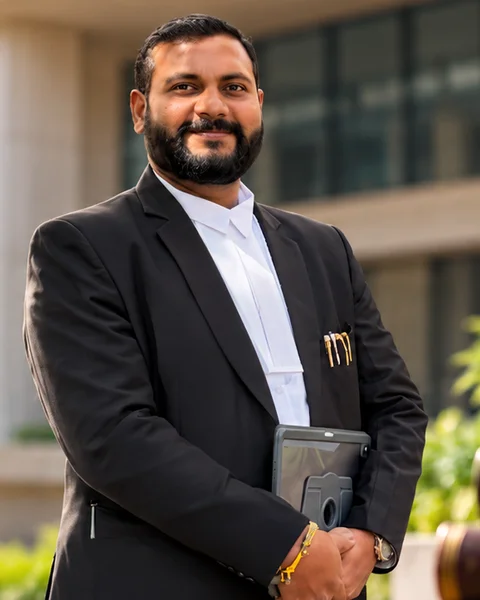
Advocate B.K. Singh
Founder of B.K. Singh & Associates. MCA, LL.B., LL.M. More than twenty years in practice before the Supreme Court, the Delhi High Court, district and commercial courts in Delhi NCR, and tribunals.
This guide explains the law in general terms and is not legal advice. For advice on your own papers, contact the team.