

In short. When you search for a recovery lawyer near me, the 'near' that matters isn't your office. It's the court that will actually hear your case, and that's fixed by how much you're owed and by where the debtor is or where the deal was done. This guide maps the courts in Delhi, Ghaziabad, Noida, Gurugram and Faridabad that hear business recovery cases, how to get to them, and how to pick a lawyer who's regularly there. Most recoveries open with a notice and mediation. That takes two to five months.
Is this your situation?
- A customer owes your business Rs 3 lakh or more, and lately your calls just ring out.
- You typed 'recovery lawyer near me' into Google and got a long list of names. Nothing on it tells you how to compare them.
- Your office is in Dwarka, the debtor's in Noida, and you've no idea whose court this is.
- One person said district court. Another said the High Court. You're not sure either of them looked at your papers.
- You'd like to know how many days you'll lose sitting in court, and who goes on all the other dates.
- Someone offered to get your money back for a cut, no notice and no case filed. It didn't feel right.
Near your office, or near the court?
Near the court. Every recovery case is heard in one particular court complex, and that's where most of a lawyer's work for you gets done. Filing. Curing the registry's objections. Short dates. Inspecting the file, collecting certified copies, meeting the mediator. A lawyer two lanes from your factory who hardly ever appears in that complex will bill you for the travel, and may send someone who doesn't know your file to the routine dates.
Your own convenience isn't irrelevant. You'll have to sign the plaint, the statement of truth and the affidavits, hand over originals and get ready for your own evidence. But that's a handful of meetings across the whole case, and quite a few can be done over video and by courier. Court dates come round far more often. So when you search for a recovery lawyer near me, find out first which court your case belongs in. Then look for someone who's in that court as a matter of routine.
There's more to test before you hire, like how the lawyer checks limitation or settles fees. Our guide on choosing a recovery lawyer in Delhi for business dues deals with that. This page sticks to geography: which court, where it is, how you reach it, and why that should shape your choice.
Working out which court is yours
Two things settle it: the size of the claim, and where the dispute connects to. Take value first. A business claim of Rs 3 lakh or more that comes out of trade, supply, services, construction, a business lease or similar dealings is a commercial dispute under the Commercial Courts Act, 2015, and it goes to a Commercial Court. Interest up to the filing date counts towards that value. Under Rs 3 lakh, it's an ordinary civil court, usually a Civil Judge in the district.
Delhi has an extra layer. Claims up to Rs 2 crore are heard by the District Judge (Commercial Court) of the relevant Delhi district, and anything bigger by the Delhi High Court's Commercial Division. The High Court's Full Court did recommend, in July 2026, that district courts should go up to Rs 10 crore. Without an amendment to the Delhi High Court Act, that stays a recommendation, so check on filing day. Uttar Pradesh and Haryana have no such layer. In Ghaziabad, Gautam Buddh Nagar, Gurugram and Faridabad, the court designated as Commercial Court for the district takes every commercial suit from Rs 3 lakh upwards. Big or small.
For territory, look at Section 20 of the Code of Civil Procedure, 1908 (CPC). It lets you sue where the debtor lives or does business, or where the cause of action arose, wholly or in part. With a supply deal, that tends to mean the place the order was accepted, the place the goods were delivered, or the place payment was due. It's common for two or three courts to qualify. Choosing between them depends on the facts. Delhi's districts each have their own commercial courts, so a South West Delhi debtor is sued at Dwarka and an East Delhi debtor at Karkardooma, no matter where your lawyer's chamber is. How the districts are divided is on our Delhi district commercial courts page.
The NCR courts that hear business recovery cases, and how to get there
| Court complex | Covers | Where it is, and getting there | Recovery cases it hears |
|---|---|---|---|
| Tis Hazari | Central and West Delhi districts | Civil Lines side, just north of Old Delhi. Tis Hazari station on the Red Line | Commercial suits up to Rs 2 crore for those districts, and civil suits under Rs 3 lakh |
| Patiala House | New Delhi district | Near India Gate. Khan Market or Supreme Court metro, then a short ride | Commercial suits for New Delhi district, which takes in Connaught Place and Lutyens' Delhi businesses |
| Karkardooma | East, North East and Shahdara districts | Near Anand Vihar. Karkarduma Court station on the Pink Line, or Karkarduma on the Blue Line | Commercial suits from trans-Yamuna Delhi, Patparganj and Shahdara traders included |
| Rohini | North West and North districts | Sector 14, Rohini, just off the Outer Ring Road | Commercial suits from places like Narela, Bawana, Wazirpur and Rohini itself |
| Saket | South and South East districts | Press Enclave Marg, Saket | Commercial suits from Okhla, Nehru Place, Mehrauli and round about |
| Dwarka | South West district | Sector 10, Dwarka, close to the metro | Commercial suits from Dwarka, Najafgarh, Palam and the Kapashera belt |
| Delhi High Court | All of Delhi, once the claim is above Rs 2 crore | Sher Shah Road. Supreme Court station on the Blue Line | Commercial suits above Rs 2 crore, and appeals from Delhi's commercial courts |
| Ghaziabad district court | Ghaziabad district | Raj Nagar, next to the collectorate | Every commercial suit of Rs 3 lakh and above for Ghaziabad, Sahibabad and Loni included |
| Gautam Buddh Nagar district court | Noida and Greater Noida | Surajpur, Greater Noida | Every commercial suit of Rs 3 lakh and above for the district |
| Gurugram and Faridabad district courts | Each one's own Haryana district | The district court complex in each city | Every commercial suit of Rs 3 lakh and above for that district |
How Delhi's district court complexes differ from each other
Delhi's seven district court complexes run on the same law and much the same procedure. But each one has its own filing section, its own commercial court rooms and its own District Legal Services Authority, which handles pre-institution mediation for that district. Your Section 12A application goes to the authority for the district where you'd file the suit. Pick the district carelessly at the mediation stage and you've created a mismatch the defendant can use later.
Every complex has its quirks, too. Lawyers who are at Karkardooma every week know how its commercial courts list fresh suits and how long the filing counter takes to send back objections. Those who practise at Saket know which courts take evidence on which days. None of it changes the law. It changes how smoothly your file moves. And a recovery case usually turns on dozens of small steps taken on time, far more than on one grand argument.
Delhi's district courts take e-filing, and many let counsel or parties join by video if asked. That cuts the burden of distance on routine dates. It doesn't remove it. Evidence, mediation sessions and some hearings still go better with people physically in the room. And a lawyer who's in the complex anyway can step in at short notice when a matter is advanced, or when a court picks up a file earlier than anyone expected.
Across the border in Ghaziabad, Noida, Gurugram and Faridabad
The law itself doesn't change at the border. The Commercial Courts Act, the 120-day cap on the written statement, Section 12A mediation and summary suits under Order XXXVII run the same way in every NCR district. The courts and the paperwork are where things differ. Ghaziabad and Gautam Buddh Nagar each have a court designated as Commercial Court for the district, with appeals to the Commercial Appellate Division of the Allahabad High Court. Gurugram and Faridabad appeals go up to the Punjab and Haryana High Court in Chandigarh.
Each state fixes its own court fees. The same claim can cost a different amount to file in Ghaziabad than in Delhi or Gurugram, so check the current schedule wherever you're filing. Language differs too. A lot of orders and filings in UP district courts are in Hindi, and whoever handles your case there should be at home with that. Travel matters in practice as well. From Vaishali, the Ghaziabad court at Raj Nagar is an easy drive. Surajpur in Greater Noida is a longer haul from most of Delhi.
Some disputes touch two states. A Noida unit selling to a Delhi buyer, for instance, may find both forums open. Our guide on filing a money recovery suit when the debtor is in another city explains how to weigh them. That includes where the debtor's bank accounts and property are, since that's where the decree will eventually have to be executed.
Notice, mediation, MSME Council or suit: what comes first?
The opening moves are much the same across Delhi NCR. You send a legal notice saying what's owed, on which documents, and by when. If nothing comes of it and the claim is commercial, Section 12A of the Commercial Courts Act makes you try pre-institution mediation before you can sue. Only a need for urgent interim relief, say an order to stop the debtor shifting assets, lets you skip it. The mediation lasts up to three months, and both sides can agree to two more. Settle there and the settlement can be enforced as if it were an arbitral award. For the notice itself, see our page on a legal notice for recovery.
If mediation fails, you sue. When the claim rests on a written contract, an invoice accepted in writing, a cheque or a promissory note, a summary suit under Order XXXVII of the CPC can move faster, because the debtor has to ask the court for leave to defend and show a real defence. Otherwise it's a regular commercial recovery suit. Our money recovery suit page explains both.
There are two other doors. If you're a micro or small enterprise registered under the MSMED Act, 2006, you can take a delayed payment to your state's MSME Facilitation Council, where interest runs at three times the RBI bank rate. That Act was amended in 2026. The amendment came out on 13 August 2026, and some of it was reported in force from 15 October 2026, but as of late October 2026 we hadn't found the new Sections 18, 18A and 19 notified. Check before you rely on them. The other door is a bounced cheque. You can file a criminal complaint under Section 138 of the Negotiable Instruments Act, 1881 while the civil claim carries on, and chequebouncelawyer.com deals with that. Banks and financial institutions recover through the DRT. Different forum.
Picking a recovery lawyer near you: the location questions to ask
- First, ask which court your case belongs in. If the lawyer answers only after looking at your invoices, the delivery address and the debtor's GST registration, that's the work being done properly. A court named without looking at anything is a guess.
- Ask how often the lawyer is actually in that complex. Being in the Tis Hazari or Karkardooma commercial courts every week isn't the same as dropping in once a quarter. It shows in how fast objections get cured and how short dates get handled.
- Ask who goes on the routine dates. Plenty of dates are purely procedural, and a junior colleague attending them is normal. You should still know that person's name, and how you'll hear what happened the same day.
- Ask how the Section 12A mediation will run. The district's legal services authority conducts it. The lawyer should tell you who sits in the sessions, what authority your representative needs to settle, and what the settlement document has to say.
- Ask about serving summons. Slow service is one of the commonest reasons recovery suits stall. Post, courier, email and the court's process serving agency are all possible, and a lawyer who chases service can save you months.
- Ask how you'll sign if you can't come in. Plaints, statements of truth and affidavits need your signature and attestation. Find out how the office handles that when you're in another city.
- Ask about video hearings, but don't lean on them completely. They're useful for routine dates. Evidence and settlement meetings often need people in the room.
Who you'll be dealing with, from Dwarka and Vaishali
Both Advocate B.K. Singh and Advocate Sadhna Singh handle recovery and commercial work in courts all over Delhi NCR, from the firm's two offices, in Dwarka, New Delhi and Vaishali, Ghaziabad. In practice that's every Delhi district court complex, the Delhi High Court, and the Ghaziabad and Gautam Buddh Nagar district courts, with Gurugram and Faridabad files run from the same base. Advocate Sadhna Singh handles the recovery files day to day. Advocate B.K. Singh is the founder and principal advocate, and has more than twenty years behind him in civil, commercial, banking and recovery work.
We put the offices at opposite ends of the region on purpose. From Dwarka, the Dwarka courts are close, and Gurugram and west Delhi aren't far. From Vaishali, it's a short drive to the Ghaziabad court at Raj Nagar, with Karkardooma and Noida nearby. The Delhi Metro's Blue Line network links both, and it's the same network that gets you to the Delhi High Court. Local detail is in two guides: one on a commercial court lawyer near Dwarka court, and one on cases heard near Vaishali and Ghaziabad.
One thing about how files are handled here. When a recovery matter comes in, Advocate B.K. Singh's first question is where the debtor's money and property really are. Not just where its office is. A decree from the court down the road from you isn't worth much if every account and asset sits in another state. Sometimes that one question decides which of two possible courts makes more sense.
How a recovery matter gets going, from first call to filing
The times are typical ranges. They aren't promises. A debtor who engages, or one who vanishes, changes the pace.
Share the papers
Send over the invoices, ledger, purchase orders, delivery proof and whatever messages the debtor has sent. A first review usually takes one meeting, in person or online. If the debtor's a company, its registered address and directors can be pulled from the MCA portal before you meet.
Pick the court and the route
The claim is worked out with interest, limitation is checked, and the courts with jurisdiction are identified. You get a recommendation for one of them, with reasons. This is also when you choose between a summary suit, a regular suit and the MSME Council.
Send the legal notice
It states the amount, the basis and a deadline, usually 15 days. It goes to every address you have, by post and email. Hang on to the tracking receipts.
Apply for Section 12A mediation
No payment and no urgency? Then an application goes to the legal services authority for the district where the suit will be filed, and the other side is notified. If it doesn't show up, a non-starter report issues and you can sue. If it does, sessions follow.
Draft and file the suit
The plaint, the statement of truth, the list and affidavit of documents and any interim application are prepared, signed and filed with court fee. Registry objections get cured. The suit is then listed before the Commercial Court, and summons issue.
Chase service and the first dates
Service is tracked and proof filed. The defendant's 30-day and 120-day limits for the written statement are watched. In a summary suit, the 10-day limits for appearance and leave to defend get very close attention.
From the notice to the first hearing of the suit is often two to five months, most of it spent in mediation. If you need urgent relief, the suit can go in straight away, without mediation, provided the plaint shows the urgency is real.
What a recovery case in Delhi NCR costs in time and money
| Stage | Costs besides the lawyer's fee | Typical time (no promises) |
|---|---|---|
| Legal notice | Postage and courier | Whatever deadline the notice gives, usually 15 days |
| Section 12A mediation | Mediation fee by claim slab under the 2018 Rules, split between the parties. Check the current schedule | Up to 3 months, extendable by 2 |
| Filing the suit | Ad valorem court fee under the schedule of the state you file in (Delhi, UP or Haryana). Check the current figure | 1 to 3 weeks to clear objections and get a first date |
| Service of summons | Process fee, courier, and sometimes publication if the debtor dodges service | 1 to 3 months, longer if the debtor dodges |
| Written statement or leave to defend | Nothing for the plaintiff | 30 to 120 days for a written statement. 10 plus 10 days in a summary suit |
| Evidence and arguments, if contested | Witness travel, certified copies, typing | Commonly 1 to 3 years in all at trial level |
| Executing the decree | Process fee, attachment and sale costs | Months to years, depending on what the debtor owns |
What to bring to the first meeting
Proof that they owe you
- The purchase orders, work orders or contract
- Every unpaid invoice, with the delivery challans, e-way bills or completion sign-offs
- Your ledger for the debtor's account and, if you have it, their last balance confirmation
- Bank statements showing any part payments they made
Proof of where things happened
- Delivery addresses, where the order was placed and accepted, and which bank account payment was due in
- The debtor's GST registration, showing its principal and additional places of business
- Any jurisdiction clause in the purchase order, the invoice terms or the contract
Messages, and what's already been tried
- Emails and WhatsApp chats where the debtor admits the dues or promises to pay
- Any legal notice already sent, and the reply to it
- Your Udyam registration certificate, if you're a micro or small enterprise
An invented example: a Sahibabad label printer and a Kirti Nagar furniture maker
We've made this one up. In Sahibabad Industrial Area, Ghaziabad, a printer makes labels and cartons. One customer is a furniture maker in Kirti Nagar, West Delhi. It emails its orders from Kirti Nagar and takes the cartons at its Kirti Nagar godown. The printer's invoices ask for payment into its Ghaziabad bank account. Rs 41 lakh hasn't been paid. Eight months ago the buyer messaged to say it would clear the dues after the festive season. Nothing since.
The printer's owner searches for a recovery lawyer near him and turns up several in Ghaziabad. The question that really matters, though, is which court. Payment was due in Ghaziabad, so the Ghaziabad commercial court has jurisdiction. The buyer carries on business in Kirti Nagar and took delivery there, so the commercial court at Tis Hazari, which covers West Delhi, has jurisdiction as well. Either will do.
What tips it is the buyer's side. Its showroom, godown and bank accounts are all in West Delhi. A Tis Hazari decree can go straight after those assets, with no transfer from another state. The printer's witnesses can get to either court easily. So the printer picks West Delhi and starts Section 12A mediation through the West Delhi legal services authority. It also keeps the Ghaziabad lawyer's advice that the buyer's eight-month-old message is a written acknowledgment under Section 18 of the Limitation Act, which keeps the older invoices within time. None of this is from a real file. It only shows how a court gets chosen when two are open.
When 'near you' isn't enough
For most suppliers and service firms in NCR, a lawyer who works across the region's courts covers it. A few situations change that. If the debtor's in Mumbai or Bengaluru and nothing links the deal to NCR, the case will be heard there, and you'll need a lawyer, or associate counsel, who appears in that court. A Delhi firm can coordinate. Someone still has to be there in person.
Lenders who advanced money to a business should start with the loan agreement and any guarantee, because the suit may lie where the money was paid out or where it was to be repaid. Landlords owed rent by a commercial tenant are usually tied to wherever the property is, and the Commercial Courts Act applies only if the premises were used exclusively in trade or commerce. Startups chasing a big corporate customer should read that customer's contract carefully. It may have an arbitration clause naming a seat in another city. If it does, the seat decides where things happen. Your address doesn't.
Online consultation helps when you're far from both the lawyer and the court. Our guide on whether you can consult online for a commercial dispute explains how a first review over video works, and what still needs a meeting in person.
Red flags when you search for a money recovery lawyer near me in Delhi NCR
- Someone offers to get the money back for a share of it, with no notice, mediation or suit. Collecting by pressure or threats is unlawful and can land you with criminal complaints. Bar Council rules also stop advocates from charging fees that depend on the result, or taking a cut of what a case brings in.
- A promise of a date, or a result. No advocate controls when a court decides, or what it decides. Ranges are honest. Guarantees aren't.
- Advice before a single document has been read. Recovery turns on paper: the invoice terms, the acknowledgment, the delivery proof. Without them, it's a guess.
- Touts at the court gate. People who come up to litigants promising a quick settlement or a judge they know shouldn't be trusted. Engage an advocate directly, and check the enrolment with the Bar Council.
- No written fee agreement. Fees should be talked through at the first meeting and agreed in writing, stage by stage, with court fee, mediation fee and other costs listed separately.
- Silence on where the debtor's assets are. A lawyer who thinks only about filing, and never about execution, may win you a decree you can't collect on.
Three things to write down before you hire anyone
Put three things on paper before the first meeting. One: the debtor's exact legal name, the address on its GST registration and, if it's a company, its registered office. Suing the wrong entity happens more than it should, a sister concern, say, or a proprietor's trade name when the debtor is actually a company. It's avoidable. Two: the date of the oldest unpaid invoice, and the date of the latest written acknowledgment or payment. Most money claims have a three-year limitation, and those dates decide whether the older invoices are still alive. Three: where you delivered, where the order came from, and where the money was meant to be paid.
Bring those answers, and any lawyer you meet should be able to tell you in one sitting which court your case belongs in, which route makes sense and what it'll involve. Then you're comparing lawyers on substance. Not just on distance. Our unpaid invoice recovery page explains how invoice claims are usually put together.
This week
Put the debtor's ledger and the unpaid invoices in one folder. Add the delivery proof, the debtor's messages admitting the dues and the bank statements showing part payments. Write down the three things above: the debtor's legal name, the key dates, and where delivery and payment happened. And don't fire off angry messages or threats to the debtor. They rarely help. They can be used against you.
Then talk to a lawyer who's regularly in the court your answers point to. If you'd like your papers reviewed, the route chosen and the right court in Delhi NCR pinned down, call or WhatsApp +91 96259 61599, or send your documents to Advocate B.K. Singh's team through the contact page. There's more on the court process on our money recovery suit page.
Frequently asked questions
How do I find a recovery lawyer near me in Delhi NCR who handles business dues?
Work out which court your case belongs in first, from the claim value and from where the debtor is or where delivery and payment happened. Then look for an advocate who's regularly in that court complex and does commercial recovery. Check enrolment. Ask who'll attend routine dates.
Can I file a recovery case in the court nearest my office?
Only if that court has territorial jurisdiction under Section 20 of the CPC, for instance because payment was due at your office or the contract was made there. Convenience on its own gives a court no jurisdiction. Often two courts qualify, and then you can choose.
Which court hears a business recovery case in Noida?
Commercial claims of Rs 3 lakh and above in Gautam Buddh Nagar district go to the court designated as Commercial Court for the district, at the district court in Surajpur, Greater Noida. Smaller claims go to the district's civil courts. Appeals go to the Allahabad High Court.
Is there a separate court just for recovery cases in Delhi?
No court does only recovery. Commercial claims of Rs 3 lakh and above go to the District Judge (Commercial Court) in each Delhi district complex up to Rs 2 crore, and to the Delhi High Court above that. An increase in that limit has been recommended, so check the current figure.
Do I have to attend every hearing of my recovery suit?
No. Most dates are procedural, and your lawyer handles them. You'll be needed to sign the plaint and affidavits, for mediation sessions where someone with settlement authority must attend, and for your evidence. Some courts allow video appearance if asked.
Can a Delhi recovery lawyer handle a case in Ghaziabad or Gurugram?
Yes. An advocate enrolled with any State Bar Council can appear in courts anywhere in India. The real question is whether the lawyer appears there regularly, knows the local practice, and can get someone to the dates without delay.
What if the debtor has moved to another city?
You can usually still sue where the cause of action arose, such as where you delivered or where payment was due. Execution is another matter. It has to reach the debtor's assets wherever they now are, so trace them before you choose the court.
Is it legal to use a recovery agent instead of a lawyer for business dues?
Polite reminders through an agency are lawful. Threats, harassment or visits meant to frighten are not, and they can lead to criminal complaints against you. When reminders fail, the lawful routes are a legal notice, mediation and, if it comes to it, a suit.
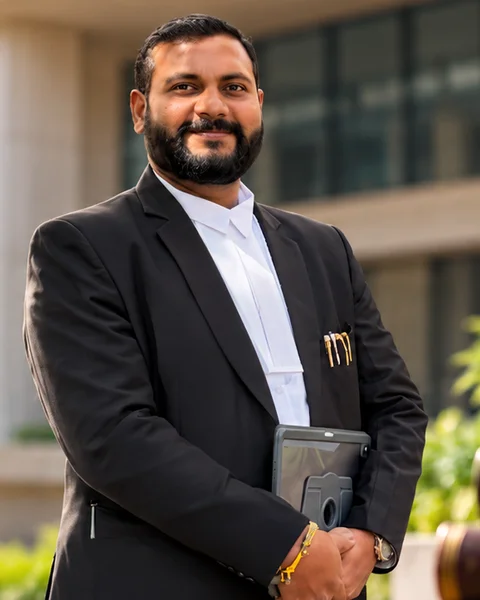
Advocate B.K. Singh
Founder of B.K. Singh & Associates. MCA, LL.B., LL.M. More than twenty years in practice before the Supreme Court, the Delhi High Court, district and commercial courts in Delhi NCR, and tribunals.
This guide explains the law in general terms and is not legal advice. For advice on your own papers, contact the team.