

In short. Advocate B.K. Singh (Bagesh Kumar Singh) founded B.K. Singh & Associates and is its principal advocate. The practice handles commercial suits and recovery of business dues across Delhi NCR, from offices in Dwarka, New Delhi and Vaishali, Ghaziabad. This page covers what the practice does, how he reads a new file, and the mistakes he sees again and again. It's written for businesses owed money, or sued over a contract, where Rs 3 lakh or more is at stake. Start by sharing your papers. The first review usually takes one meeting.
Is this your situation?
- You typed BK Singh advocate, or Bagesh Kumar Singh, into Google and want to be sure this is the practice someone told you about.
- A distributor owes you Rs 3 lakh or more. He used to pick up the phone. He doesn't any more.
- Summons in a commercial suit arrived at the office this morning, and you want to know who'll actually read it and what happens next.
- A friend in the trade gave you the firm's number. Before you call, you'd like to know how things work there.
- One person said commercial court, another said MSME Council, and your CA mentioned arbitration. You don't know which.
- You want a straight answer on whether to sue at all, not a pitch.
Advocate B.K. Singh, in brief
Advocate B.K. Singh's full name is Bagesh Kumar Singh. He started B.K. Singh & Associates, part of the Legals365 network in Delhi NCR, and is its principal advocate. His degrees are an MCA, an LL.B. and an LL.M. He's practised for more than twenty years, in the Supreme Court of India, the Delhi High Court and other High Courts, Delhi's district courts, the Ghaziabad and Gautam Buddh Nagar courts, and tribunals. Civil, commercial, corporate, insolvency, banking and recovery work all cross his desk. This website deals with only one part of that. Business disputes headed for a Commercial Court.
If you searched for BK Singh lawyer, bk singh advocate delhi or Advocate Bagesh Kumar Singh, you've found the same person and the same practice. The offices are in Dwarka, New Delhi and Vaishali, Ghaziabad. Phone and WhatsApp are on +91 96259 61599. If you only want a time fixed, the guide on booking a consultation in Dwarka or Vaishali walks you through it.
This isn't a profile in the usual sense. Bar Council rules don't let advocates advertise results or rank themselves, and frankly a page of claims wouldn't help you decide anything. What's more useful is knowing how he works a commercial file. What he reads first, what he asks, where businesses usually go wrong before they ever see a lawyer, and what to expect once your dispute is with his team.
What kind of commercial and recovery work comes in?
The heart of the practice is business-to-business money and contracts. Recovery suits for unpaid invoices. Suits over loans and advances one business gave another, or for damages when a contract is broken. Summary suits under Order XXXVII of the Code of Civil Procedure, 1908 (CPC), where there's a written contract, a bill or a bounced cheque. The compulsory mediation before filing that Section 12A of the Commercial Courts Act, 2015 requires. Then urgent injunctions, attachment of a defendant's assets before judgment, defending businesses that have been sued, appeals, and executing a decree after you've won. The commercial court services page takes each one in turn with the law behind it.
Usually the Commercial Courts Act applies. The dispute comes out of an ordinary commercial transaction, and the specified value is at least Rs 3 lakh. Section 2(1)(c) covers a long list, including supply, service and IT contracts, distributorships and franchises, disputes between partners or shareholders, leases of shops and offices used in business, construction work, and intellectual property. Under Rs 3 lakh, you're in the ordinary civil court instead. We take those matters as well. The rules, the time limits and the speed aren't the same, though, and it pays to know which track you're on from the first day.
A few kinds of work sit on sister sites in the network, since other forums hear them. For arbitration petitions under the Arbitration and Conciliation Act, 1996, see arbitrationlawyer.in. NCLT and insolvency work, bank recovery in the Debts Recovery Tribunal and cheque bounce prosecutions have separate sites too. Real disputes don't stay in one box. The distributor who hasn't paid you might also have given you a cheque that bounced, and he might run a company large enough to be pushed into insolvency as well. That's why the first talk tends to be about the forum your facts point to, not whichever website brought you here.
What does he check first when a new file lands?
Order matters here. Any one of these checks can end the discussion early, so they all come before strategy. For unpaid dues, the guide on how a recovery file is reviewed in the first 30 minutes goes over the same ground minute by minute.
- Who exactly the other party is. Look at the invoice, the GST certificate and the MCA record. You'll often find three slightly different names. He pins down which legal person really contracted with you, whether a company, LLP, partnership firm or proprietor, and checks it's still alive. Win a decree against the wrong entity and you've won nothing.
- How much time is left. Most money claims have to be filed within three years under the Limitation Act, 1963. He fixes the start date for each invoice, then hunts for a written acknowledgment or a part payment that might have stretched the period under Sections 18 and 19.
- What the papers actually prove. An invoice shows you raised a bill. That's all. By itself it doesn't prove delivery, acceptance or the agreed price. He looks for the purchase order, the delivery challan or e-way bill, the signed receipt and any ledger confirmation, because together they make a claim very hard to deny.
- What the other side is going to say. Before talking about your case, he tries to put the defendant's case at its strongest. Maybe a quality complaint, or a delay, or a set-off for some other deal, or a dispute raised in an email you've forgotten about. Miss it now and it turns up as a surprise in the written statement.
- Which route fits. It could be a legal notice, Section 12A mediation, a summary suit or a regular suit. It could be a reference to the MSME Facilitation Council, a cheque bounce complaint, or, for large undisputed debts owed by companies, insolvency. The documents and what the debtor owns decide it. Habit doesn't.
- Whether the debtor can pay. A decree is only as good as the assets behind it. Before he tells you to spend money on a suit, he'll ask what you know about the debtor's bank accounts, property, receivables and other litigation.
Does an MCA background actually help in a commercial practice?
Yes, because these days commercial cases turn on electronic records. The purchase order is an email. Delivery is confirmed with a WhatsApp photo. The ledger lives in Tally or some ERP, and even the contract may be a PDF signed online. The Bharatiya Sakshya Adhiniyam, 2023 took over from the Indian Evidence Act on 1 July 2024, and under Section 63 an electronic record has to be proved with a certificate in the format the Act prescribes. Get the certificate wrong, or skip it, and you've handed the other side a free objection.
That's where the computer science training is genuinely useful. Hand him a WhatsApp export and he'll ask which handset it was taken from, whether that handset is still around, and whether a single message has been edited or deleted since. Give him a ledger printed out of Tally and he'll want to know if any entry was touched after the dispute began, since that's exactly what the other side's counsel will put to your accountant in cross-examination. These small questions decide whether a document is admitted without fuss or argued over for months.
It helps in disputes that are about technology, too. Software development contracts, SaaS subscriptions, app and website projects, access to data after a vendor relationship ends. The facts in those cases are buried in tickets, commit histories and server logs. Somebody has to read them. The evidence side is explained in more detail in the guide on proving emails and WhatsApp chats in a commercial court.
Mistakes he sees before a file ever reaches us
- Taking a part payment with nothing in writing. The debtor sends Rs 50,000 by UPI with no reference, then later says it was full and final. Under Section 19 of the Limitation Act, a part payment restarts limitation only if it's acknowledged in writing signed by the payer, or in his handwriting. A bank entry on its own may not do it.
- A legal notice with the wrong figure in it. Rushed notices often add interest at a rate nobody agreed, or include invoices that were already paid. The debtor replies pointing out the mistake. Later the court reads both letters side by side.
- Suing the wrong person. In the ordinary course, directors of a private limited company aren't personally liable for its trade debts. A proprietor is liable for the proprietorship's debts. That difference changes who you sue and what you can attach.
- Treating Section 12A mediation as a box to tick. Skip it without a genuine case for urgent relief and you invite rejection of the plaint under Order VII Rule 11 CPC. Turn up without a settlement figure in mind and you've wasted up to three months.
- Missing the written statement deadline. A defendant in a commercial suit gets 30 days to file a written statement, which can stretch to an outer limit of 120 days from service of summons. After 120 days the right's gone. People still walk in on day 100 with nothing drafted.
- Tidying up the evidence. Screenshots cropped, ledger columns deleted before printing, an agreement re-signed years later because the original got lost. Each of these can be caught. Once one is, the court looks at everything else with suspicion.
- Waiting for one more promise. A debtor who says next week, every week, is often paying other creditors first or moving stock out. And each month you wait is a month of limitation gone.
How long each stage takes, and what it costs besides the lawyer's fee
Typical ranges for commercial courts in Delhi NCR. They aren't promises. The court's board, service of summons and the other side's behaviour all move them.
| Stage | Usual time | Costs besides the professional fee |
|---|---|---|
| Reading your papers and advising on the route | One meeting, then a written note, depending on how many papers there are | Nil, apart from copying and courier |
| Legal notice | Drafted in a few days. Most notices give 15 to 30 days to pay | Postage or courier |
| Section 12A pre-institution mediation | Up to three months, which both sides can agree to extend by two months. This time doesn't count towards limitation | Rs 1,000 application fee plus a mediation fee linked to claim value under the 2018 Rules, shared by the parties. Check the current figures |
| Preparing and filing the suit | Usually two to four weeks for the plaint, documents and statement of truth | Ad valorem court fee on the claim under state law. Check the current schedule before filing |
| Written statement | 30 days, stretchable to 120 days from service at most | The court may impose costs for filing late within the 120 days |
| Admission and denial, case management, evidence | Roughly 6 to 18 months in most district commercial courts. Longer with many witnesses | Process fee, certified copies, witness expenses |
| Final arguments and judgment | A few weeks to a few months after evidence closes | Certified copy of the judgment and decree |
| Execution of the decree | Courts are expected to decide execution ordinarily within six months (Rahul S. Shah v. Jinendra Kumar Gandhi, Supreme Court, 2021). In reality it depends on the assets | Process fee, plus publication and auction costs if property is sold |
We don't quote professional fees on this site. They're discussed at the first meeting and agreed in writing, stage by stage, as the guide on how fees are discussed and agreed explains.
What happens after you contact Advocate B.K. Singh's team?
Most commercial matters start at the firm like this. Urgent ones, say a written statement almost due or a defendant about to clear out its stock, move faster, and some steps run together.
First call or message
Call or WhatsApp +91 96259 61599, or use the contact form. Give us both parties' names, the amount and any deadline you know about. Before anyone reads your papers closely, we run a conflict check on the other party's name. We can't act against someone we already represent.
Papers shared
Send the core documents. That's the contract or purchase orders, invoices, ledger, delivery proof, the emails and chats that matter, and any notice already sent or received. Scans are fine for now. Originals stay with you until a court needs them.
Review meeting
We read the papers before the meeting, not during it. The meeting itself (in Dwarka, in Vaishali or online) goes on filling gaps, testing the defence the other side will run and finding out what the debtor owns.
Advice on route
You're told which route fits and why, what it'll cost in court fee and other expenses, and roughly how long each stage runs. If the honest advice is don't sue, you'll hear that too.
Fee agreed in writing
Professional fees are agreed in writing, stage by stage, so you know what's covered at notice, mediation, filing, trial and execution. Court fee and out-of-pocket costs are separate, and you're told them in advance.
Notice, mediation and filing
The legal notice goes out. Where it applies, the Section 12A application goes to the Legal Services Authority. The plaint is drafted with full disclosure of documents under Order XI CPC and a statement of truth.
Updates through the case
After every hearing you get a short note. What happened, the next date, and anything you need to do before it.
Who else works on your file?
Advocate Sadhna Singh works on recovery and commercial court matters with Advocate B.K. Singh and handles much of the day-to-day. In practice she often reads the file closely, prepares the drafts, attends routine hearings and keeps you informed between dates. The big decisions are taken with him. Strategy, route, the hearings that matter.
Outside Delhi NCR, we work alongside associate counsel in the state concerned. In the Supreme Court, filing has to go through an Advocate-on-Record, since its rules let nobody else file. Clerks and research staff look after filing, inspecting court records and getting certified copies. You can see the people on the team page, and before each date you'll know who's appearing and in what role.
This matters more than it sounds. Businesses that change lawyers mid-case often say the same thing. They never knew who was actually standing up in court for them. Knowing that in advance, and getting a note after each date, takes away most of the worry.
How the advice changes for suppliers, service firms, lenders and defendants
Suppliers of goods mostly end up fighting about whether the goods arrived and were accepted. Picture an auto-parts maker in Faridabad. If it holds delivery challans signed at the customer's gate and a ledger confirmation from the customer, it's well placed. If all it has is invoices and a transporter's bill, it's in trouble. Under Sections 15 to 17 of the MSMED Act, 2006, a registered micro or small enterprise can claim interest at three times the bank rate notified by the RBI, and Section 18 lets it refer the dispute to the MSME Facilitation Council. Parts of this scheme were changed by the MSMED (Amendment) Act, 2026. We couldn't find the new Sections 18, 18A and 19 notified as of late October 2026, though, so confirm where things stand before choosing that route. There's a second open question. If the Udyam registration came after the contract, does it still count? A larger bench of the Supreme Court has that pending.
Service firms and IT vendors usually end up arguing about scope and acceptance, and in those fights milestone sign-offs, change requests agreed by email and usage logs matter more than the invoices do. Say a Gurugram software vendor is owed for a project that went live three months ago. It should keep the go-live email. And the client's first support tickets, which show the work was in use.
Where you lent money to another business, the bank transfer proves money moved. It doesn't prove the terms. With a promissory note, a loan agreement, or even an email setting out the terms, a money recovery suit or summary suit becomes far easier. Cash loans bring tax questions under the Income-tax Act, 2025, so look up the current provision before you lean on one.
Defendants, the first month decides a lot. Your written statement clock starts when summons is served. In a summary suit it's tighter still. Ten days to enter appearance, then ten days from service of the summons for judgment to seek leave to defend. If you have a counter-claim, work on it now alongside the written statement, not after.
Where will your case be filed, and does our office location matter?
Value and territory decide the court. Start with value. In Delhi, a commercial suit of Rs 2 crore or less is heard by the District Judge (Commercial Court) at whichever district complex has jurisdiction. Above Rs 2 crore, it's the Delhi High Court's Commercial Division. The Full Court of the Delhi High Court recommended in July 2026 that the district ceiling go up to Rs 10 crore. That can't happen without amending the Delhi High Court Act, so confirm the limit in force when you file. Across the border in Uttar Pradesh and Haryana, commercial courts work at District Judge level in each district, Ghaziabad, Gautam Buddh Nagar, Gurugram and Faridabad among them. Appeals from Ghaziabad or Noida go to the Allahabad High Court. From Gurugram or Faridabad, they go to the Punjab and Haryana High Court.
Territory comes from Section 20 CPC. You can file where the defendant resides or carries on business, or where the cause of action arose, wholly or in part. So the place of delivery, of acceptance, of payment, or where the contract was signed may each give a court jurisdiction. A clause in the contract can pick one of those courts and shut out the rest, but it can't hand jurisdiction to a court that never had any. That part is settled. There are worked examples on the page about which commercial court will hear your case.
Our office addresses have nothing to do with which court hears you. They're about convenience, nothing more. Dwarka is near the Dwarka court complex (South West Delhi matters) and an easy enough drive from Gurugram. Vaishali is near the Ghaziabad courts and handy for East Delhi. We attend Saket, Tis Hazari and the other complexes, the Delhi High Court and Noida in the ordinary course.
A made-up example: the box maker who billed the wrong buyer
Invented, but typical. A corrugated box maker in Noida Phase II sends a snack brand cartons worth Rs 38 lakh across eight months. Purchase orders arrive from a private limited company. Invoices go out in the brand's name. Payments come from an LLP the same promoters run, until they stop coming. The owner, meanwhile, has had a local typist send a legal notice to the brand name demanding 24 percent interest.
At the first review, one problem after another surfaces. Three entities could be the defendant. The notice named none of them correctly. Nothing in the purchase orders mentions 24 percent. The four oldest invoices are past three years, which looks fatal until you spot a balance confirmation the LLP's accountant signed fourteen months back. Under Section 18 that may save all four. And the manufacturer's Udyam registration came after the first orders, so going to the MSME Council carries legal risk.
So the advice runs like this. A new notice goes out, accurate this time, to both the company and the LLP. Section 12A mediation starts against the two of them. Meanwhile a commercial suit is readied for the Gautam Buddh Nagar commercial court, naming them in the alternative and claiming interest at a rate a judge could actually accept. Then comes a question the owner hadn't asked himself. The brand sells through big retail chains, so if it starts winding down, what's left to attach? Not one court appearance went into any of this. Just reading the papers in the right order.
What to send before the first conversation
Scans or clear phone photos are enough to start. For a longer list, with the reason behind each document, see the guide on what to bring to your first meeting.
What was agreed
- The contract, purchase orders or work orders
- The quotation and the email accepting it
- Whatever terms are printed on the back of your invoices
Proof you delivered
- Delivery challans, e-way bills, signed receipts
- Completion certificates, go-live or sign-off emails
- Photos or inspection reports if they're complaining about quality
Where the money went
- Invoices and the party's full ledger
- Bank statements showing what they did pay
- Any balance confirmation or acknowledgment
The fight so far
- Emails and WhatsApp chats about payment or complaints
- Legal notices sent either way, with the replies
- Summons, plaint and order sheets if you've been sued
What you won't hear from him, and why
Nobody here will promise you a result, or a date. An honest advocate can't. The board belongs to the court, the other side decides how it behaves, and the debtor decides what happens to its assets. Rule 36 of the Bar Council of India Rules stops advocates advertising or soliciting work. The same chapter forbids fees tied to the outcome or to a share of the recovery. You won't see a percentage of recovery on offer, then, or a success figure.
Expect instead to hear plainly where your own file is weak. If three invoices have no delivery proof, you'll hear that those three are exposed. Close to the limitation date? Then the advice is to act this week, not next month. An ambitious interest claim gets an honest estimate of what a court is likelier to allow under Section 34 CPC or the MSMED Act. In the first meeting, some clients don't enjoy this much. By the third hearing they're usually glad of it.
How do you know you've got the right BK Singh?
BK Singh is a common name. Several advocates practise under it, in different cities. The practice on this page is the one with offices in Dwarka, New Delhi and Vaishali, Ghaziabad, on +91 96259 61599, and linked to the Legals365 network of sites. If someone calls or messages from a different number saying they're from the firm, check by ringing the number on the contact page yourself.
You can ask any advocate in India for enrolment details and verify them with the State Bar Council concerned. Ask if it matters to you. It's an ordinary request, and no advocate should take offence. Fees agreed with the firm are paid against a written fee note. Never in cash to someone you've only spoken to on the phone.
Be just as careful with anyone who offers to get your case decided quickly through contacts. Courts don't work that way. Walk away.
When will the advice be to stay out of court?
More often than people expect. If the debtor has shut down and owns nothing you can trace, a decree costs money and recovers none. If the claim's plainly time-barred with no acknowledgment, filing anyway just adds costs that might be awarded against you. And if the papers are thin and the relationship's worth keeping, a firm notice followed by a properly drafted settlement agreement with post-dated instalments may do more than a suit would.
Small claims are the other situation. Under Rs 3 lakh it isn't a commercial dispute at all, and a full civil suit could eat up nearly as much as you're owed. Alternatives, from Lok Adalat to conciliation at the MSME Council, are set out in the guide on recovering money without going to court. Choosing not to sue for sound reasons is still a choice. Make it with your papers on the table, not out of exhaustion.
Where to go from here
If your dispute is commercial and you want to see everything the practice covers, start with the commercial court services overview. If you already have a debtor in mind and a folder of invoices, the quickest step is to put the papers in date order and send them.
If you'd like your contract, invoices and correspondence read before you decide anything, share them with Advocate B.K. Singh's team through the contact page.
Frequently asked questions
Is Advocate BK Singh the same person as Bagesh Kumar Singh?
Yes. BK Singh is short for Bagesh Kumar Singh, the founder and principal advocate of the firm. The offices are in Dwarka, New Delhi and Vaishali, Ghaziabad.
Will I meet him in person, or someone else from the firm?
It's a team. Much of the first close reading and the routine work is done by Advocate Sadhna Singh, and strategy and the hearings that matter are settled with him. Tell us when booking if you'd like him there at a particular stage.
Does the firm take a percentage of the money recovered?
No. An advocate can't charge a fee linked to the result or take a cut of the recovery. Bar Council of India rules forbid it. We discuss fees at the first meeting and put them in writing, one stage at a time.
Can the practice handle a case in a court outside Delhi NCR?
Yes, through associate counsel in that state, with the Delhi NCR team doing the drafting and strategy. Matters in Delhi, Ghaziabad, Noida, Gurugram and Faridabad are attended directly.
Does he appear in the Supreme Court in commercial matters?
He appears before the Supreme Court of India. Filing there goes through an Advocate-on-Record, as the Supreme Court Rules require. A special leave petition is ordinarily filed within 90 days of the High Court's judgment.
My business has been sued. Is it too late to get in touch?
Get in touch the day the summons arrives. The written statement deadline in a commercial suit is 30 days, extendable to 120 days at the outside. In a summary suit, you get only ten days to apply for leave to defend.
Is the first consultation free?
Ask when you call. You'll be told the terms of the first consultation before the meeting, and anything further is agreed in writing before it starts.
Does the practice also handle DRT and cheque bounce cases?
Yes. They're part of the wider practice, covering banking, recovery and cheque matters, but each has its own site in the network. Where unpaid invoices and a bounced cheque come together, we plan both at once.
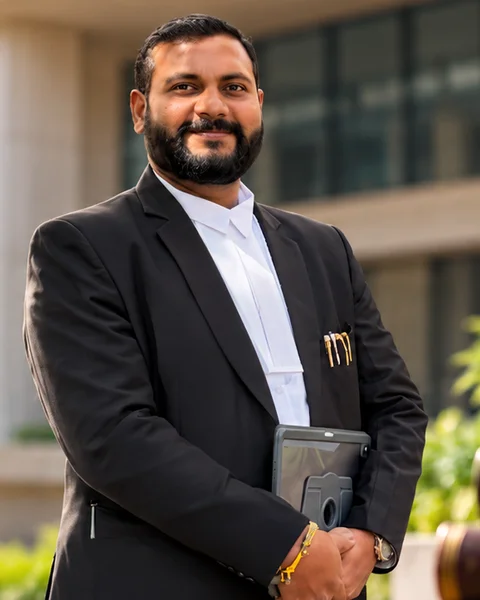
Advocate B.K. Singh
Founder of B.K. Singh & Associates. MCA, LL.B., LL.M. More than twenty years in practice before the Supreme Court, the Delhi High Court, district and commercial courts in Delhi NCR, and tribunals.
This guide explains the law in general terms and is not legal advice. For advice on your own papers, contact the team.