

In short. You can tell a lot about an arbitration lawyer in Delhi from one meeting. Do they read your arbitration clause and check the limitation dates before talking strategy? Can they tell you which court or institution will be involved? Will they say plainly who drafts and who argues, check for conflicts with the likely arbitrator, and put the fee in writing, stage by stage? This guide is for businesses about to start or defend an arbitration. Shortlisting takes a week or two. Get your contract and notices together today.
Is this your situation?
- Your contract has an arbitration clause. The other side has stopped paying, or stopped work, or just sent you a termination letter.
- A notice invoking arbitration landed on your desk, or a Section 11 petition from the Delhi High Court, and the reply is due in days.
- The clause says their managing director or chief engineer picks the arbitrator. You have a feeling that can't be right.
- You've met two advocates already. One said six months and the district court, the other said two years and the High Court.
- The other side is about to encash your bank guarantee, or sell goods you've paid for, and the arbitration hasn't even begun.
- An award has come, for you or against you, and someone now has to challenge it or enforce it.
- You already have a lawyer on the arbitration, and lately you've started wondering whether the file is really being looked after.
What an arbitration lawyer in Delhi should actually be doing for you
The hearings are the visible part. They're not the whole job. An arbitration lawyer in Delhi should carry the dispute from start to finish: reading the clause, sending or answering the notice that starts things off, getting an arbitrator appointed, drafting your statement of claim or defence, preparing your witnesses and cross-examining theirs, arguing before the tribunal, and then dealing with the award, whether that means challenging it or enforcing it. Quite a few of those steps happen in court, not in front of the arbitrator. So your lawyer has to be comfortable in both rooms.
Most business owners face an arbitration once, maybe twice, in a working life. They don't know what good work looks like. The lawyer usually knows that they don't. The checks below are meant to close that gap, and you won't need a law degree for any of them. You need to ask direct questions. Then watch whether the answers get specific or stay vague.
Settle one thing first. The Bar Council of India Rules don't let any advocate in India advertise or call himself or herself the best at anything. So a list ranking lawyers isn't worth much, and a lawyer quoting you a win rate is already breaking the rules. What you can judge is method. Watch how the lawyer reads your papers and how clearly the risks are explained, and look at how the work and the fee are set out before you sign anything.
Why arbitration needs a different kind of preparation
In a civil suit you can often repair a mistake. You file an amendment application, a further affidavit, or you go up in appeal on the facts. Arbitration is far less forgiving. The tribunal sets a tight timetable, and the Arbitration and Conciliation Act, 1996 expects pleadings to be finished within six months of the arbitrator's appointment (Section 23(4)) and the award within twelve months after that (Section 29A). Both sides can agree to six more months. Beyond that, someone has to go to court.
The real difference shows after the award. A Section 34 challenge isn't an appeal. The court won't reweigh the evidence or fix a wrong view of the facts, as the Supreme Court made plain in Ssangyong Engineering v. NHAI (2019). You win or lose before the tribunal, with whatever documents and witnesses you put in early. Some lawyers still treat the arbitration casually, thinking the High Court will sort it out later. That picture is out of date.
There's also money involved that court cases don't ask for. The parties pay the arbitrators. In an institution like the Delhi International Arbitration Centre (DIAC), they also pay administrative charges and keep topping up deposits as the case goes on. A sensible arbitration advocate in Delhi plans those deposits with you from the beginning. Miss one and your claim can stall. It can even be closed.
Nine checks to run when you sit down with an arbitration advocate in Delhi
- Enrolment and standing. Ask for the enrolment number and which State Bar Council they're with, then confirm it with that Bar Council. A genuine advocate won't mind you asking.
- The clause comes first. See whether the lawyer asks for the contract and reads the arbitration clause before starting on strategy. The seat, the institution, how many arbitrators, any steps you must take before arbitration, it's all in there.
- Dates before arguments. A careful lawyer wants to know when the cause of action arose, when you last got a payment or a written acknowledgment, and whether a notice has already gone out or come in. Limitation decides more arbitrations than people think.
- Court work around the arbitration. Ask how often they file Section 9, Section 11 and Section 34 petitions in the Delhi High Court and the district commercial courts. Ask for a walk-through of what happened procedurally in a recent matter. No names needed.
- Who's actually doing the work. Who drafts? Who cross-examines? Who turns up for the routine dates? Get those names written down.
- Conflicts. Has the lawyer or the firm ever acted for the other side? Are they close to an arbitrator you're likely to end up in front of?
- Costs that include the tribunal. You should hear about arbitrators' fees, institutional charges and court fees on related petitions, kept separate from the professional fee.
- Honest weaknesses. Ask what the other side's strongest point is. A lawyer who can't name one either hasn't read the file or is telling you what you'd like to hear.
- Written terms. Fees, stages and scope of work should sit in an engagement letter before any work begins.
Is your arbitration clause read before anyone talks strategy?
Of all the checks, this one tells you the most. Plenty of problems are sitting in the clause on day one. It might name a venue but not a seat, and that can turn into a fight over which court supervises the arbitration. Our guide on how the seat of arbitration decides the court explains why. Or it might send disputes first to talks between senior officers, or to mediation. Your lawyer should tell you whether that step has to be finished, or at least put on record, before you invoke arbitration.
Then there's the clause that lets one side appoint the sole arbitrator. You see these all the time in contracts drafted by the bigger party. After TRF Ltd v. Energo Engineering (2017) and Perkins Eastman v. HSCC (2019), a party with an interest in the outcome can't appoint the sole arbitrator on its own. In 2024 a Constitution Bench in Central Organisation for Railway Electrification v. ECI-SPIC-SMO-MCML went further and held that unilateral appointment clauses offend equality between the parties. A lawyer who reads that clause and stays quiet has missed something basic. We've set out the detail in why a one-sided arbitrator appointment is invalid.
A careful reading catches other things too. Does the clause cover every dispute, or only some kinds? Was the agreement made through an exchange of emails or letters? That still counts as a written agreement under Section 7. And did the group company you want to go after ever sign anything at all? Take our note on mistakes people make in arbitration clauses with you to the first meeting.
Can your lawyer handle the court work that comes with an arbitration?
In India, arbitration touches the courts at four points. Before or during the arbitration, you may need interim protection from the court under Section 9, say an order stopping encashment of a bank guarantee or keeping goods safe. If the other side won't cooperate in appointing an arbitrator, the High Court appoints one under Section 11. After the award, the losing side can challenge it under Section 34. The winner enforces it under Section 36, just like a decree. Appeals from some of these orders go under Section 37.
Where these petitions are filed in Delhi depends on the value and nature of the dispute. Commercial disputes above Rs 2 crore go to the Commercial Division of the Delhi High Court on its original side. Smaller ones go to the District Judge (Commercial Court) at Saket, Tis Hazari, Karkardooma and the other district complexes. Section 11 petitions always go to the High Court. A lawyer who's in these courts week after week knows the case types (Section 11 petitions are listed as ARB.P., objections to awards as O.M.P. (COMM)), how matters get listed and roughly how long each stage takes.
Ask about urgency. If you need a Section 9 petition for urgent interim relief, it may have to be drafted and filed in a day or two. If the other side has ignored your notice, ask how they'd go about a Section 11 petition to get an arbitrator appointed. And if the award is already out, see whether the lawyer can explain the narrow grounds for challenging an arbitral award under Section 34 without overselling them. Plenty can't resist.
Who drafts, who argues, and who turns up at the hearings?
A small team usually does arbitration work. One advocate leads on strategy and argument. A junior drafts and keeps the documents in order. Sometimes a senior advocate is briefed for final arguments or a difficult court hearing. Nothing wrong with any of that, as long as you're told in advance. The complaint we hear from businesses isn't that a junior went to a hearing. It's that nobody ever told them who was running the case.
Arbitration hearings don't work like court dates. They're fixed by agreement with the tribunal, often in blocks of two or three days for evidence. They might be at DIAC's hearing rooms in the Delhi High Court premises, in a conference room hired for an ad hoc matter, or on video. Some retired judges who sit as arbitrators hold hearings in the evenings or on Saturdays. Ask who'll attend each kind of hearing. Ask whether the lead lawyer will personally cross-examine the other side's main witness. That cross-examination often decides the case.
And ask how you'll be kept in the loop. A short note after each hearing, a copy of every order and a running list of next dates is a fair minimum. Vague about it now? Expect the same later.
Conflicts: is the lawyer connected to the arbitrator, or to the other side?
Arbitrators have to be independent and impartial. Section 12 of the Act makes a prospective arbitrator disclose anything that could raise doubts, going by the grounds in the Fifth Schedule. Section 12(5), read with the Seventh Schedule, rules some people out entirely, an employee, consultant or advisor of a party, for instance. That ineligibility can be waived only by an express written agreement made after the dispute has arisen. The Supreme Court said so in Bharat Broadband Network v. United Telecoms (2019).
As the client, you're left with two questions. Has the lawyer or the firm acted for the other side, now or recently? And does the lawyer have a close working tie with the arbitrator you're likely to get, such as regularly sitting on tribunals together or sharing chambers? Lots of experienced arbitration lawyers also sit as arbitrators themselves. That's normal. But you're entitled to know about any connection the other side could later use to attack the award. If the opposing party ever challenges the arbitrator, our guide on objecting to an arbitrator who isn't independent explains the 15-day window in Section 13. Don't sit on it.
How should the fee be agreed?
A lawyer's fee in India is a matter of agreement between the two of you. Get it in writing, stage by stage: notice and appointment, Section 9 if you need it, pleadings, evidence, arguments, and whatever comes after the award. Some lawyers charge per hearing, some a fixed amount per stage, some a mix of both. Rule 20 of the Bar Council of India Rules bars an advocate from agreeing a fee that depends on the result, or from taking a share of what's recovered. If someone offers to work for a percentage of the award, that's where the conversation ends.
The lawyer's fee is only one part of what you'll spend. The parties pay the arbitrators, usually in equal shares. In an ad hoc arbitration their fees are often fixed with reference to the Fourth Schedule of the Act or the High Court's rules, and at DIAC they follow the Centre's published schedule, which goes by the sum in dispute. Then add administrative charges in institutional cases, stenographer and venue costs in ad hoc ones, court fees on any Section 9, 11 or 34 petition, and certified copies and affidavits. Our guide on what arbitration costs in India breaks it down further.
Keep every receipt. Under Section 31A costs generally follow the event, so the tribunal can make the losing side pay your reasonable costs. But tribunals award what's proved. Paper matters.
Warning signs when you're choosing an arbitration advocate
- A promised result or a date. No honest lawyer can promise you an award, a figure or a timeline. The Act does set deadlines, but extensions happen all the time.
- Nobody asks about dates. If nobody asks when the dues arose or when you last got an acknowledgment, the limitation risk is being ignored.
- You're told to ignore a notice or a petition. Stay silent after a notice invoking arbitration and the court usually appoints the arbitrator anyway. You've just thrown away your chance to agree on someone.
- A suggestion to quietly name a friendly arbitrator yourself. After the 2024 Constitution Bench ruling, a one-sided appointment puts the entire award at risk.
- A civil suit filed despite a clear arbitration clause, with no reason given. The other side just asks the court under Section 8 to send the matter to arbitration. Months gone.
- The fee is tied to the award. That's not allowed. Someone who'll bend this rule will bend others.
- There's no engagement letter. Terms nobody wrote down cause more client and lawyer fights than anything else we see.
Arbitration lawyer near me: does the office location matter?
Less than you'd think. Where your matter is heard depends on the seat of the arbitration and, for court petitions, on the court that has jurisdiction over that seat. If the seat is New Delhi, Section 11 petitions go to the Delhi High Court, and other petitions go to the Delhi High Court or a district commercial court depending on value. A seat in Noida or Ghaziabad puts you under the Allahabad High Court. Gurugram or Faridabad means the Punjab and Haryana High Court at Chandigarh.
Still, having your lawyer nearby helps in very ordinary ways. A document-heavy case takes several sittings to go through ledgers, site records and email trails, and that's far easier across a table than on a phone call. Witness preparation works better in person too. Our offices are in Dwarka, New Delhi and in Vaishali, Ghaziabad, so we cover businesses across Delhi and the eastern NCR. Many hearings at DIAC and before ad hoc tribunals now run on video as well. Check the current practice with your tribunal.
Is your dispute seated in another city? Then ask whether the lawyer will travel, bring in local counsel or appear by video. And ask how that changes the fee.
How Advocate B.K. Singh's team goes through your papers at a first meeting
At a first meeting, Advocate B.K. Singh's team starts with the arbitration clause and the dates. The story can wait. We read the clause for the seat, the institution, the number of arbitrators, how they're to be appointed and any step that has to come before arbitration. Then we make a dates sheet: when each invoice or claim fell due, the last payment, any written acknowledgment, when a notice was sent and when it was received. We check who actually signed the contract. We check whether the party you want to proceed against is the same legal entity, because often it isn't. Anything missing gets listed then and there, so you know what to dig out. You go home with a plain note of your options, including whether a settlement offer, the MSME Facilitation Council, a commercial suit or arbitration makes sense for the amount involved, and roughly what each route will cost in court and tribunal fees. We won't promise you an outcome. Nobody honest can.
What to bring so any lawyer can size up your arbitration
The contract itself
- The signed contract, work order or purchase order, with every annexure and amendment
- Any separate arbitration agreement, or the general terms your contract points to
- For government or PSU work, the tender papers or general conditions of contract
- Bank guarantees, performance securities and whatever the retention terms say
Where the money went
- Invoices, running bills, debit notes and credit notes
- Their ledger from your books, plus any reconciliation you did with them
- Bank statements showing what they actually paid
- Your interest working if you've made one, and the TDS certificates
Letters, emails and messages
- Emails, letters and WhatsApp messages about the dispute, put in date order
- Minutes of meetings and site records
- Any legal notice, reply, notice invoking arbitration or court papers that have already gone back and forth
- Postal receipts and tracking printouts for the notices you sent
Company papers
- Certificate of incorporation, or the partnership deed
- A board resolution or authority letter for whoever will give the lawyer instructions
- Your Udyam registration certificate, if you're a micro or small enterprise
- GST registration of both sides
Shortlisting and engaging an arbitration lawyer, one step at a time
Sort the papers
Give it a day. Put the contract, invoices, ledger and correspondence in date order. Write a one-page chronology in your own words. It helps any lawyer grasp the dispute fast, and the first meeting gets shorter.
Get two or three names
Ask your chartered accountant, your trade association, or business friends who've been through an arbitration. Reported orders of the Delhi High Court in arbitration matters also name the advocates who appeared. Worth a look.
Hold the first meetings
Run the checks in this guide at every meeting. Write down how each lawyer handles the clause, which dates come up and what's said about the weak spots in your case.
Ask for a written note of options
A short note on the route, the stages, likely court and tribunal costs and the documents still missing lets you compare lawyers on substance. Impressions from one meeting aren't enough.
Put the terms in writing
Agree the scope of work, the team, the fee for each stage and how out-of-pocket costs will be billed. Only then sign the engagement letter and the vakalatnama or authority letter.
Fix the first action date
If a notice has to go or a reply is due, agree the exact date it goes out. Limitation and the 30-day windows in the Act won't wait for your paperwork.
Time and costs once your arbitration lawyer is on board
| Stage | Typical time | What you pay apart from the lawyer's fee |
|---|---|---|
| Notice invoking arbitration under Section 21 | A week or two to draft and send; then 30 days for the other side to respond | Postage and courier; no court fee |
| Section 11 petition, if the other side won't cooperate | Often 2 to 6 months from filing to appointment | Court fee on the petition (check the current figure), affidavits, certified copies |
| Section 9 petition for interim relief | Can be listed within days if urgent; the final decision takes varying time | Court fee on the petition; cost of any security the court asks for |
| Tribunal constituted and first hearing held | 2 to 8 weeks after appointment | Arbitrators' fees and, at DIAC, administrative charges, usually split equally |
| Pleadings (claim, defence, counterclaim, rejoinder) | Up to 6 months from appointment under Section 23(4) | More deposits whenever the tribunal or institution asks |
| Evidence and final arguments | 6 to 12 months, depending on the witnesses and the tribunal's diary | Stenographer, venue (ad hoc), witness travel, translation if needed |
| Award | Within 12 months of pleadings being complete under Section 29A; 6 more months by consent, anything further only through the court | The rest of the arbitrators' fees |
| Section 34 challenge or Section 36 enforcement | Challenge within 3 months of receiving the award (plus up to 30 days); court time varies | Court fee on the petition or execution; a deposit if the court makes one a condition of stay |
Where your arbitration, and the court cases around it, will be heard
The arbitration is heard wherever the tribunal sits. Usually that's the seat named in the clause, though hearings can happen at some other venue for convenience. The supervising courts, though, are fixed by the seat. Section 2(1)(e) of the Act defines the court as the principal civil court of original jurisdiction, or the High Court where it has ordinary original civil jurisdiction. The Delhi High Court has that for higher-value matters.
For commercial disputes, Section 10 of the Commercial Courts Act, 2015 sends Section 34 petitions and enforcement to the Commercial Division of the High Court where it has original jurisdiction, or else to the Commercial Court in the district. In Delhi, that's the High Court above Rs 2 crore and the District Judge (Commercial Court) below it. Check the current limit, though. In July 2026 the Delhi High Court's Full Court recommended raising it to Rs 10 crore, and that change needs an amendment to the Delhi High Court Act. Section 11 petitions in domestic arbitrations go to the High Court. In an international commercial arbitration, they go to the Supreme Court.
If DIAC is administering your arbitration, you'll deal with the Centre for filings, deposits and hearing rooms. Court applications still go to whichever court has jurisdiction. If your clause names the Centre, our sister site has a plain guide to picking a lawyer for a DIAC arbitration.
How the choice changes for claimants, respondents and different kinds of business
- Suppliers and contractors chasing money. You want someone who builds the claim on paper: running bills, measurement books, delivery challans, the ledger. Your interest and limitation workings should be on a spreadsheet you can check yourself.
- Buyers and employers defending a claim. Early on, the job is pinning down defects, delays and set-offs, and deciding whether to bring a counterclaim, which runs on its own limitation clock. Ask how your lawyer would test the claimant's figures.
- Micro and small enterprises. If you're a registered micro or small supplier, you may have a stronger route through the MSME Facilitation Council under Section 18 of the MSMED Act. In Gujarat State Civil Supplies v. Mahakali Foods (2022) the Supreme Court held that it overrides a private arbitration clause. Your lawyer should raise this without being asked; see how the MSME Facilitation Council works. The MSMED (Amendment) Act, 2026 changes parts of the Council procedure, and not all of it had been notified as of late October 2026. Check the current position.
- Contractors working for government departments and PSUs. These contracts tend to carry old-style appointment clauses, thick general conditions and pre-arbitration committees. A lawyer who's dealt with them before saves you time.
- Startups. Money is tight, so costs matter a lot. Ask about a sole arbitrator, fast track proceedings under Section 29B if both sides agree, and frankly whether your claim is big enough to justify arbitration at all.
- Large companies and foreign parties. Several contracts, group companies and an international angle raise questions about the seat, the governing law and enforcing abroad. Ask how much the lawyer has worked alongside in-house teams and foreign counsel.
An invented example: two first meetings, two very different answers
This one is made up. A Gurugram IT services company is owed about Rs 1.4 crore by a Noida-based retail chain for software support billed over two years. The contract says a sole arbitrator appointed by the chain's managing director will decide disputes, with the seat at New Delhi. The oldest unpaid invoices are almost three years old.
At the first meeting, Lawyer A listens to the story for an hour, calls the claim strong, promises an award within a year and asks for an advance. Nobody opens the contract. At the second, Lawyer B reads the contract before anything else and picks out three things. The appointment clause is one-sided and shouldn't be followed as written. A few invoices are close to the three-year limit, so a notice invoking arbitration has to reach the chain within days. And with the seat at New Delhi, any Section 11 petition will go to the Delhi High Court. Lawyer B also expects the chain to argue that some support tickets were never resolved, and asks for the ticket logs.
The company goes with Lawyer B. The notice goes out that week. The chain doesn't respond within 30 days, so a Section 11 petition is filed and the court appoints a sole arbitrator under DIAC. Whether the claim succeeds is still an open question. But nothing was lost to limitation, and everyone knew the weak point from day one.
What to do this week
Take out the contract and read the arbitration clause yourself. Mark the seat and the way the arbitrator is appointed. List every unpaid amount or disputed item with its date, and note any acknowledgment or part payment. Put the correspondence in date order. Then meet two or three advocates and run the checks above. If you'd like a sense of what's coming before those meetings, read our overview of arbitration lawyer services in Delhi and the guide on getting ready for an arbitration hearing as a business owner.
If you'd like your clause, dates and documents gone through the way we've described, book a consultation with Advocate B.K. Singh's team.
Frequently asked questions
Do I need a lawyer for an arbitration at all?
Strictly, no. The Act doesn't require a party to be represented by an advocate, and a company can appear through an authorised officer. In practice most businesses do hire counsel. There are court petitions, formal pleadings and cross-examination, and mistakes are hard to undo once the award is out.
Can our in-house legal team run the arbitration instead of an outside lawyer?
Your in-house team can prepare documents and instruct counsel, and that often saves money. But court petitions under Sections 9, 11, 34 and 36 have to be filed and argued by an enrolled advocate. So most companies use outside counsel at least for those.
Should I brief a senior advocate for my arbitration?
It depends on the value and how hard the case is. Plenty of arbitrations are handled start to finish by one advocate and a junior. A senior advocate is sometimes brought in for final arguments, a Section 34 challenge or a tricky point of law. Ask your lawyer to explain the cost and what you'd gain before you agree.
How do I check whether an advocate is genuinely enrolled?
Ask for the enrolment number and the name of the State Bar Council, then confirm it with that Bar Council. You can also look at the orders in matters the advocate says they've appeared in. Appearances are recorded in the order sheet.
Can a lawyer charge a percentage of the arbitral award?
No. Bar Council of India rules don't allow an advocate to fix a fee that depends on the result, or to take a share of what a case brings in. The fee should be per stage, per hearing or on some other basis that has nothing to do with what you recover.
Can I change my lawyer in the middle of an arbitration?
Yes. You tell the tribunal and the other side, the new advocate files an authority or vakalatnama, and the old lawyer hands over the file. Before you switch, collect copies of every pleading, all the evidence, every order and the deposit receipts.
Can a Delhi lawyer handle an arbitration seated in Mumbai or Bengaluru?
Yes. An advocate enrolled in India can appear before an arbitral tribunal anywhere, and before courts across the country. Ask how the hearings will be covered, whether local counsel will come in for court petitions, and how travel is charged.
What should I ask about costs at the first meeting?
Ask for the professional fee stage by stage, an estimate of the arbitrators' fees and any institutional charges, the likely court fees on related petitions, and how out-of-pocket expenses are billed. Ask, too, what happens to costs if you win. Tribunals can order the losing side to pay reasonable costs under Section 31A.
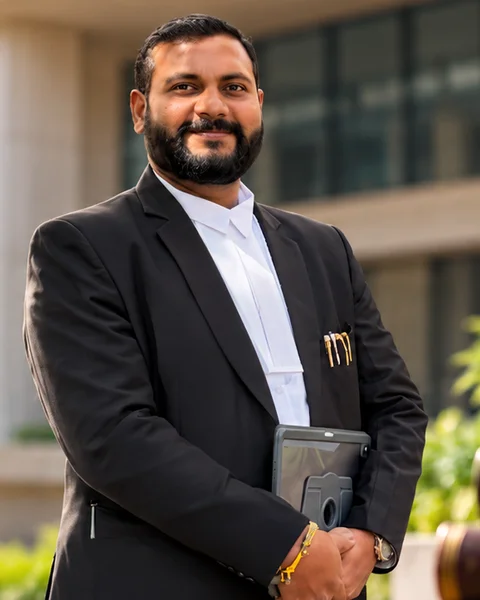
Advocate B.K. Singh
Founder of B.K. Singh & Associates. MCA, LL.B., LL.M. More than twenty years in practice before the Supreme Court, the Delhi High Court, district and commercial courts in Delhi NCR, and tribunals.
This guide explains the law in general terms and is not legal advice. For advice on your own papers, contact the team.